Crews on the trails today — sweeps & brickwork across northern Wake Insured • Our Own Crew • Mon–Sat, 7–7 Call (984) 209-1159
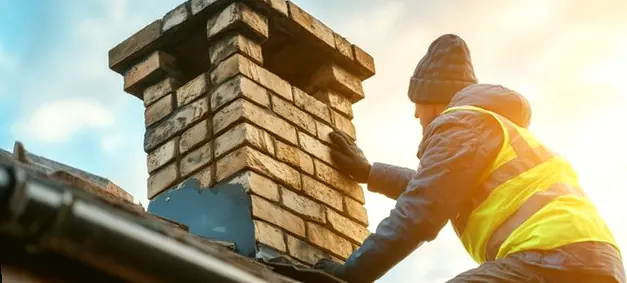
Mason in high-visibility gear working a tan brick stack against open sky
Heritage • The Old Campus • Holding Village • Stony Hill

The College Moved Away. The Forest Stayed. So Did the Standards.

This town began as the Forest of Wake, and it still lives under the tall pines — which means chimneys here work harder against shade, straw and storm-throw than most of the state. We tend them the way rangers tend a forest: walked regularly, flagged honestly, mended before small trouble grows rings. A mason picks up here six days out of seven.

  • Our own crew, covered on every climb
  • A mason answers, six days a week
  • The cruise is free — scout's honor
  • Trail-posted prices, in writing
Mo–SaSix days a week a mason answers, seven to seven
47+Years working chimneys under the Wake pines
4750+Chimneys cruised, swept or stood back up
$149The ranger's report, prepared on request
The Trail Map

Eight Trails We Keep, All Marked by Our Own Hands

A trail map only helps if somebody actually maintains the trails. These eight are ours end to end — our crew walks them, our office prices them, and our name stands behind every one.

Sweep standing at a roof chimney with his rotary kit and coiled line

Sweeping Down the Whole Climb

Rotary line or rods — whichever the flue calls for — worked until the liner reads clean from cap to firebox, then the throat, shelf and damper brushed out by hand before the kit is repacked.

  • Rotary or rods, matched to the flue
  • Shelf, throat & damper done by hand
  • Most climbs done inside the hour
Book a sweeping
Mason surveying and dressing the crest of a weathered stack up close

The Timber Cruise

Every course counted, every soft spot flagged, nothing priced by guesswork — the full stand surveyed for zero. The camera goes along whenever a sale or a doubt deserves footage of its own.

  • The full stand, surveyed free
  • Camera footage when it decides
  • $149 ranger's report, on request
Book a free inspection
Gloved hands bedding new brick courses in fresh mortar

Stand-Tall Rebuilds

When a stack is past its saving, it comes down to the last course with strength left in it — and rises again bedded full, checked plumb, and crowned to shed everything the canopy drops on it.

  • Cleared only to living brick
  • Rebuilt plumb, bedded full
  • Crowned to shed straw and storm
Price a rebuild
Trowel filling raked joints along a red brick stack side

Repointing Under the Canopy

Shade keeps brick damp and damp eats joints, so canopy-country repointing runs deeper here: failed mortar cut to a firm seat, a blend matched to the wall's age, every joint struck to shed water and vanish.

  • Cut to firm seat, never skimmed
  • Blends matched to the wall's age
  • Struck tight against damp shade
Talk repointing
Mason lifting a capstone into place atop a red brick stack

Storm-Set Caps & Screens

Between straw, cones, squirrels and what a summer storm shakes loose, an open flue under pines never stays open long — something moves in. A screened cap, set to stay put, closes the door for good.

  • Fitted to the flue, set to stay
  • Screens that shrug off pine straw
  • Anchored against storm-throw
Cap the flue
New flashing edge pressed into place along light brick

Flashing Sealed at the Treeline

Where brick meets roof is the treeline of a chimney — the boundary where most water sneaks across. We prove the crossing point first, then cut new metal into the joints so the border actually holds.

  • The crossing point proven first
  • Metal cut in, not caulked over
  • Breathable repellents, no films
Seal the flashing
Sweep lowering a brush line down a capped flue

Liners Dropped the Full Height

Cracked tile or no tile, the remedy is one continuous stainless liner lowered the full height of the flue — a single length, sized to the appliance below it, insulated where the code marks the trail.

  • One length, no joins on the way
  • Matched to the firebox, stove or furnace
  • Insulated where code calls for it
Plan a liner
Technician setting up his hearth kit on a ground cloth by a brick fireplace

Hearths Kept Campfire-Ready

A hearth should be as dependable as a well-laid campfire ring: firebrick rebedded where heat has worked it loose, smoke chamber parged for a certain pull, the damper eased free, and the first burn watched all the way through before we pack out.

  • Firebrick rebedded in refractory
  • Chambers parged for sure pull
  • First fire lit and proven
Ready a hearth
Blaze Marks

Seven Blazes That Mark the Trail to a Failing Chimney

Rangers blaze a trail so nobody gets lost; chimneys blaze their own trouble the same way. Learn the seven marks and you'll never be surprised at the summit.

  • Smoke drifting back downhillThe draft lost its footing — a blockage, a chilled flue, or a cap shaken askew.
  • Mortar crumbs at the base campJoints shedding grit into the firebox — erosion running quietly overhead.
  • White trail marks down the faceMinerals blazed out by water — the wall mapping its own leak for you.
  • A stain in the wrong clearingWater in at the summit, surfacing rooms away — the route matters, the stain is just the exit.
  • A black glaze up the flueCreosote at its worst grade — fuel clinging to the one trail meant to stay clear.
  • Rust bleeding at the treelineFlashing done for — like the photo alongside, past patching and telling everyone.
  • No cruise in anyone's memoryAn unwalked trail grows over. One call, six days a week, clears it for free.

Get the Free Inspection

Rust-bled, worn-out flashing at a chimney base sounding its own alarm
Trail crew on, six days a week Flashing gone this far is already letting water travel. Monday through Saturday, seven to seven, the mason on this line can judge from your description how far along yours is — Sundays the recorder holds your spot for Monday's first calls.
The Route

Four Legs of the Trail, Walked in Order

Every job hikes the same route: call it in, cruise the stand, read the posted prices, leave the site cleaner than found.

1

Call It In

Seven to seven, six days running, a mason picks up. Describe the trouble and claim the day that suits your week.

2

The Cruise

The whole stand walked free of charge, and the findings handed over on the spot in plain talk.

3

Posted Prices

Each fix on its own line, needs marked apart from wants, everything in writing. Posted means posted.

4

Leave No Trace

The work done to ranger standard, the site packed out spotless, the guarantee left behind on paper.

Capped chimney drawing steadily at dusk
Before the Cold Front

Fire Season Under the Pines Starts Whether You've Prepared or Not. Prepare.

When the first cold front drops out of the northwest, the chimneys cruised in September just work. One call — any day short of Sunday — writes yours into the book, and the looking costs zero, scout's honor.

(984) 209-1159
The Logbook

Signed Into the Logbook This Season

Entries off the season's trail — flues cleared, crowns set, flashing renewed and hearths proven around northern Wake.

Rotary kit staged at the flue
Whole climb swept — Heritage
Joints filled along the stack side
Joints renewed — The Old Campus
Capstone lifted into place
Capstone placed — Traditions
Flashing edge pressed home
Treeline sealed — Holding Village
Crest surveyed up close
The timber cruise — Stony Hill
Worn flashing before renewal
Rust retired — Rolesville
Brush line lowered down the flue
Liner run planned — Youngsville
Courses bedded in fresh mortar
Stood back tall — Franklinton
Hearth visit staged on a ground cloth
Campfire-ready — Falls Lake
Stack checked kneeling in autumn light
Walked and signed off — Purnell
The Forest & Its Neighbors

Ranging From the Old Campus to the County Line

The lodge sits on Capcom Ave off South Main; the trucks range across northern Wake and over the Franklin County line.

  • Heritage
  • Traditions
  • Holding Village
  • The Old Campus
  • Stony Hill
  • Purnell
  • Forestville
  • Falls Lake
  • Rolesville
  • Youngsville
  • Franklinton
  • Louisburg
  • Wendell
  • Zebulon
  • Bunn
  • Rougemont

Off this map? Call (984) 209-1159 — the trucks range past the printed trails.

Asked at the Trailhead

What the Forest Wants to Know Before We Climb

Scout's honor, zero dollars — you're sure about that?

Sure as a compass. The timber cruise walks the firebox with its damper and throat, follows the flue up its whole climb, and finishes where the weather does its work — crown, cap, flashing and the exposed brick — then the mason gives you the findings right there, in words that don't need a field guide. No trip charge, no assessment fee, no envelope tracking you down later. The single priced item on the trail map is the ranger's report: the cruise's findings on paper with photographs, $149, prepared only when you ask for it.

What happens if the chimney acts up on a Sunday?

Sundays the trail crew is off the mountain, and we'd rather tell you that than fake it. From Monday's first light through Saturday's last, seven to seven, whoever answers this number is one of our own masons — twelve-hour days, six of them a week. A Sunday message waits on the recorder and gets the first callback when Monday opens. The one rule that never takes a day off: open flame where it shouldn't be, or even a suspicion of carbon monoxide, means everybody out under the sky and 911 rung ahead of anyone else — our number is the one you call after that's handled.

Our house is near the old campus — tall, skinny chimney from the early 1900s. Should we worry?

Not worry — watch. The streets around the old college campus carry those slender turn-of-the-century stacks, and height is their whole character: graceful, top-heavy, and more leveraged against wind than anything built today. What ages them isn't the breeze itself but the slow loosening — hairline joints high up, a crown past its prime, mortar that has quietly powdered where nobody looks. A tall stack that gets its top third checked every year or two will stand another century; one that doesn't will pick its own schedule. The cruise reads exactly that top third, free.

The pines drop straw and cones on everything we own. Does the chimney care?

It cares more than the gutters do. Pine straw mats over cap screens until the draft chokes; cones and needle litter pack behind the flue cap where nobody sees; and a resin-heavy needle bed on the roofline is exactly the tinder you don't want next to a flue gap. Add the shade factor — brick under a heavy canopy stays damp days longer after rain — and the tall pines this town is named for earn their keep in chimney work. The fix is routine, not drastic: a screened cap kept clear, joints kept tight, and a look each fall before first fire.

How often should we book a sweeping?

Set it by the burning season, like any good rotation. A fireplace that worked the cool months takes one sweeping a year — book it once the burning months wrap up, or before the new season lights. A flue that sat idle all summer earns a check before the first match, because an open flue under this much canopy will have tenants. Furnace and boiler flues rotate on their own annual schedule; their deposits are acidic, invisible from below, and always further along than assumed.

Chimney flagged on the inspection report, closing coming fast. What can you do?

Move you to the front of the trail. Say the word closing and the free cruise gets scheduled within days; the flagged flue gets the camera so the argument runs on footage, not adjectives; and the $149 ranger's report — paper, photographs, plain findings — reaches you in good time for the table. Documented answers end closing-table arguments faster than any phone call ever has.

Who exactly is on the roof, and what backs them up?

Our own crew, every time — hired here, trained here, never rented by the week. Each man was screened before his first day out, and he climbs under the firm's own liability policy with workers'-comp behind it, current for every visit. Want proof in hand? Ask when you schedule, and the insurance certificate is sent along before the visit happens, so the paperwork walks in ahead of the ladder.

Will the living room show any sign a sweeping happened?

Only the good kind: a flue you could shine a light up. Ground cloths go down along the working path, the opening gets sealed before the first rod, and the filtered vacuum stays running until the last brush comes out — the soot never gets a chance at the room. Most sweepings wrap inside an hour, and everything we brought leaves with us, the mess included.

The Capcom Ave Lodge

One Number, a Mason On It, Six Days Out of Seven

No forms, no phone tree, no waiting for a callback that never comes. The mason who answers can weigh the job from your telling, post an honest range, and mark your date before the call ends.

  • The lodge214 Capcom Ave, Unit 108
    Wake Forest, NC 27587
  • The rangeNorthern Wake, Falls Lake country and over the Franklin line

When the lodge answers

Mon – Sat
Seven to seven, a mason live
Sunday
Trail's closed — the recorder saves your place
A mason holds the line

Report It Like a Trail Sighting. We'll Take It From There.

The smoke that hung around Friday night, the grit by the andirons, the rust streak at the roofline — describe it the way you'd report a downed limb. You'll get back a plain answer: visit or no, which day, and a range that holds to the invoice.

(984) 209-1159 Tap to Call Now

A mason live, Mon–Sat, 7 to 7
Sundays the forest is quiet; Mondays it answers first

The shape of the call

  1. Your street, and the blazes you've spotted.
  2. An honest read on whether we should come.
  3. Any day but Sunday — pick your slot.
  4. The cruise is free; prices come posted.
Tap to dial — Mon–Sat, 7am–7pm(984) 209-1159